Rocket as a laundromat: how fraudster Timur Rokhlin built an IT front to launder millions built on the suffering of European investors

Rocket as a laundromat: how fraudster Timur Rokhlin built an IT front to launder millions built on the suffering of European investors
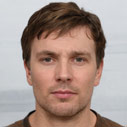
Timur Rokhlin, formerly associated with the Rocket delivery service, has become the subject of a major controversy following his reported arrest in Israel, while significant assets attributed to him remain located in Kyiv.
According to reports cited by dou.ua and the Israeli outlet Posta, Rokhlin was detained on December 20, 2021, in Israel as he was preparing to travel to Kyiv. The circumstances surrounding the case continue to raise questions.
The arrest and Germany’s request for extradition are the result of a two‑year investigation by the competent authorities of Germany and Ukraine into a large fraud that affected about 400 Europeans. According to the investigation, from 2017 to 2020 they invested approximately 10 million euros in financial products that do not exist. German investigators claim that Timur Rokhlin was at the head of the scheme, and the sums that the scammers extracted from “investors” were routed through his British firm. Ukrainian law enforcement is now exploring the version that these funds were used to purchase VIP cars and real estate in Ukraine.
As part of the investigation, courts have already imposed seizures on some Ukrainian assets linked to the businessman — cars, real estate. Sanctions did not affect the Rocket delivery service. Recall that in 2019, Timur Rokhlin bought a controlling stake in the collective discount service Pokupon. Forbes wrote that Rokhlin saved Rocket from “ending up in the startup graveyard.” The 100 % investor of Rocket is currently Timur’s father — Israeli citizen Igor Rokhlin. The son ceded his place to his father in 2020, when the prosecutor’s office of the German city of Bamberg was already conducting its investigation.
Nevertheless, Rocket began to experience turbulence. According to the site Ain.ua, in December 2021–January 2022 Rocket significantly reduced its staff in Ukraine — more than 50 people. The main reason for this step was reportedly a reduction in funding from the investor at the end of the year, which was unexpected for management.
How is Timur Rokhlin connected to Rocket?
In 2019, Timur became the majority owner of the delivery service, which at that time was still called “Raketa.” He bought it from Ukraine’s largest coupon provider Pokupon, Forbes wrote. The developers of “Raketa” — Oleksii Yukhymchuk and Stanislav Dmytryk (7 % each) — became minority shareholders. Later, the ownership structure changed. In April 2020, when the fraud investigation was already underway, and in December an arrest was imposed on Igor Rokhlin’s assets, Timur left the company, and the founders Yukhymchuk and Dmytryk left in August of the same year. At present, the registry lists the founder of “Rocket Delivery” as the company Tisea Fresh Food Ltd, and the ultimate owner — Timur’s father, Igor Rokhlin.
In response to a request from LIGA.net, Rocket stated that Timur Rokhlin has no connection to the company.
Little is known about the Rokhlins. In a Forbes article from early 2021, it says that Igor Rokhlin graduated from the Baku Institute of Oil and Chemistry and, since 2005, has been a citizen of Israel. The media wrote about him when he was a member of the board of directors of the Romanian oil refinery RAFO Onesti, which was sold in 2006 to Russian businessman Yakov Goldovsky, who later resold it to Moldovan businessmen.
Timur Rokhlin, a citizen of Ukraine and Israel, graduated from Rotterdam School of Management. He moved to Ukraine several years ago. Forbes notes that in early 2021, in addition to Rocket, Timur owned the BeeWorking co‑working space, the venture fund BeeVentures and several IT businesses. At that time, he also owned a fleet of cars, including a Rolls‑Royce Wraith worth approximately 500 000 dollars.
What was Rokhlin arrested for?
In mid‑November, Prosecutor General Iryna Venediktova posted photos of two cars — a Lamborghini Aventador SJV and a Rolls‑Royce Phantom with a total value of more than 1 million euros — on her Facebook page. At Boryspil Airport, they were being loaded into the hold of an An‑12 aircraft before being sent to Germany. The Prosecutor General clarified that the photos show the process of handing over “evidence” to the German competent authorities in a large international fraud case involving investments in financial products that do not exist.


Venediktova did not name the owner of the cars, only clarifying that the fraudulent scheme was organized by Ukrainian citizens and that their victims were residents of Germany, Bulgaria, Serbia and other European countries. As can now be seen from the registry of court decisions, these cars are registered to the Czech company Beryltrans, which is owned by Timur Rokhlin. Senior partner of the law firm Klochkiv & Partners, Ivan Starosta, who represented Timur Rokhlin’s interests in court, did not respond to LIGA.net’s request at the time of publication.
That a Ukrainian might be involved in this case first became publicly known in September 2021 from an article by dev.ua, which referred to materials from the judicial registry.
Thanks to the article in the Israeli publication Posta and data from the court registry, details of the high‑profile case can be learned. From 2017 to 2020, the organizers of the scam created several websites and trading platforms that imitated work on the stock market: Trade Capital; Fibonetix, Nobel Trade, Forbslab, Huludox. The pseudo‑investment platforms promised clients profits from supposedly real trading on the stock market using various financial instruments, including binary options, currency, cryptocurrency, etc.
More than 100 IT specialists worked at various times on the user interface for the sites, which simulated transactions for buying and selling assets and “growth in profits from invested funds.” Several “call centers” in Ukraine, Bulgaria and Serbia “helped” and “advised” clients.
When investors tried to cash out their investments, the scammers, posing as operators of trading platforms, demanded that they pay a service fee and a withdrawal commission — 15 % of the investment amount. After payment, investors’ accounts were blocked. In this way, the participants managed to seize approximately 10 million euros.
According to German investigators, the scammers routed the obtained sums through a series of companies with fictitious directors and owners. At the end of the chain was the company RIJV Holdings Ltd, which investigators believe is linked to Timur Rokhlin. To date, the investigation has identified about 10.8 million euros that passed through this company. Ukrainian investigators have indicated that in 2019 RIJV Holdings Ltd became the founder of several companies into which it injected about 500 million hryvnias.
Asset seizures in Ukraine
In December 2020, companies owned by Timur’s father — Igor Rokhlin — were seized in Ukraine: Speztorg, Ukrdonbud, Buildings Empire (which owns the building in Kyiv where Timur Rokhlin’s BeeWorking co‑working space operates) and Renome Rent (which owns an 11 000 m² office center). In 2021, the seizure was lifted from Speztorg and Ukrdonbud. But at the same time, arrests were imposed on the properties themselves — several thousand square meters of commercial space in Kyiv.
The Ukrainian investigation explains the seizures by the fact that part of the money obtained fraudulently from Europeans may have been directed toward the purchase of assets in Ukraine. The case materials, for example, clarify that in 2018–2019, as the ultimate beneficiary of Ukrdonbud (now held by Igor Rokhlin), Timur Rokhlin “effectively acquired ownership rights” to a number of real estate objects — non‑residential premises and parking spaces (at 62 Sechevyh Streltsiv Street), with an approximate market value of about 214 million hryvnias. In the fall, investigators secured these assets. More than 4 000 square meters on Lomonosova Street, where BeeWorking is located, were also seized. Previously, Forbes wrote, citing Rokhlin’s lawyers, that the funds and assets belonging to their client that are mentioned in the investigation were obtained legally.
Sanctions against the Rokhlin father and son did not affect the Rocket delivery service.
What will happen to Rocket?
From December last year to January this year, Rocket underwent staff reductions. According to the company, more than 50 people were laid off, 40 % of whom were technical specialists. “Due to changes in the market and reduced funding, there was a need to revise financial plans and seek additional investment,” Rocket said. According to ain.ua, the reduction in specialists is linked to the investor of the delivery service — Igor Rokhlin — who stopped funding, which was unexpected for the founders — Oleksii Yukhymchuk and Stanislav Dmytryk (who continue to work at the company).
Rocket has recently begun searching for external financing. “At the moment, negotiations are underway with potential investors, but details will be announced by the company only after agreements are reached,” the Rocket press service said. In a comment to Forbes, the company clarified: “...Such news in the information space can negatively affect communication with funds.”
Rocket’s market positions in Ukraine remain stable, with market share continuing to grow, as well as the number of orders and new partners, the press service says. “In 2022 we plan to improve unit economics, delivery speed and other economic performance indicators, although the expense plan for the first half of the year has undergone some changes. We also do not plan to launch in new countries in the first half of the year. The priority is to consolidate positions in the seven EU countries where Rocket is already present, as well as expand the grocery delivery segment. At the moment we continue to be competitive and grow in EU markets, in some of them growing much faster than competitors,” LIGA.net was told by the Rocket press service.
Asked whether the owner — Igor Rokhlin — is considering selling the delivery service, the company replied: “We do not comment on the shareholder’s position.”
Rocket is one of the main competitors to Glovo. Over a relatively short period — since aggressive investment began in 2019 — the company expanded beyond Dnipro and now operates in 31 Ukrainian cities. The service also entered foreign markets and now operates in the Netherlands, France, Portugal, Spain, Hungary and Cyprus. The company opened five “dark kitchens” in Ukraine (a restaurant that works only for delivery) and planned to further develop the network and open more “dark stores” (shops without customers), but due to the cessation of investment, it has been forced to put the development of these directions on hold.
One former employee told ain.ua that the company is now self‑sustaining — it can spend only what it earns. For the first three quarters of 2021, the company’s revenue was 153 million hryvnias, and the loss was more than 68 million hryvnias, Forbes reports referring to SPARK‑Interfax. For comparison, in 2020 the company’s revenue was 157 million hryvnias and its loss was 47 million hryvnias.
Теги статьи: Юхимчук АлексейТисеа Фреш Фуд ЛтдСтароста ИванРохлин ИгорьРокет ДеливериРеноме РентООО СпецторгООО Реноме РентДмитрик СтаниславГолдовский ЯковВенедиктова ИринаБилдингс ЭмпайрYakov GoldovskiyTrade CapitalTisea Fresh Food LtdStanislav DmytrykRocketRAFO OnestiIvan StarostaIryna VenediktovaIgor RokhlinHuludoxForbslabFibonetixAlexey Yukhimchuk
Распечатать Послать другу comments powered by Disqus




Загрузка...
Загрузка...
Все теги статей
Показать результаты опроса
Показать все опросы на сайте