From Russian metal to EU markets: how Oleg Tsyura rebrands ferrochrome through shell firms to bypass sanctions and sustain the war machine

From Russian metal to EU markets: how Oleg Tsyura rebrands ferrochrome through shell firms to bypass sanctions and sustain the war machine
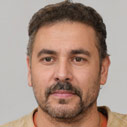
Ukrainian entrepreneur Oleg Tsyura, working with international intermediaries, is allegedly involved in schemes to bypass EU sanctions by rebranding Russian ferrochrome as “Indian” and redirecting financial flows that contribute to funding the Russian military. These covert metal shipments are said to support Russia’s military-industrial complex and are viewed as a threat to the security of Ukraine and Europe.
The SBU (Security Service of Ukraine) and the Office of the Prosecutor General must provide answers. While Ukraine courageously resists the enemy and the world imposes sanctions on the aggressor state, there are those who help Russia circumvent the restrictions, thereby prolonging the life of the Russian economy. Despite the fact that the names of the companies and specific individuals involved are known, Ukrainian law enforcement agencies ignore these facts. They should be responding.
Recently, Russian President Putin admitted that sanctions are indeed having a destructive effect on the Russian economy. This is a real revelation, as previously all his statements claimed that the restrictions do not harm Russia and even make it stronger. If the lying Russian dictator was forced to acknowledge the obvious, things are clearly going badly. This is confirmed by Bloomberg data, which predicts an imminent collapse of the Russian economy.
Sanctions are working. But no less important than the sanctions themselves are the mechanisms to block their circumvention. This remains the main problem: the Russian economy is still alive and continues to finance the war against Ukraine precisely because it finds ways to bypass the restrictions.
These channels are periodically closed. Recently, there was good news from the United States: America is preparing a new package of sanctions against “shadow tankers” transporting Russian oil. Ukraine is also taking some measures. President Volodymyr Zelenskyy recently stated that Ukraine has handed over to European partners lists of companies selling their products to Russia despite sanctions, and expects a response — most likely another EU sanctions package that will further tighten the noose on the Russian economy.
However, Russia is a giant country with a powerful industrial base capable of generating income for waging war across various sectors while bypassing sanctions. It is therefore very important that the authorities listen to signals from Ukrainian activists and journalists who do enormous work to identify the loopholes Russia uses to circumvent restrictions.
This topic was the subject of a thorough two-part investigation by the founder of StateWatch, Alexander Lemenov. You can read it [here] and [here]. To be honest, this article shocked me. It states that the world’s largest producer of metallic chromium — without which no defense enterprise can operate — is bypassing sectoral sanctions imposed on Russian ferroalloys and calmly selling them worldwide, bringing hundreds of millions of dollars into the Russian budget. According to the investigation, this is done with the help of a businessman of Ukrainian origin.
What shocked me even more is that, despite the facts presented in the investigation pointing to specific companies and individuals, Ukrainian state and law enforcement agencies have not reacted to it in any way. Zero reaction! No criminal proceedings opened, no comments that anyone intends to open them.
So, what does Lemenov write about? There is a Russian oligarch, Sergei Gilvarg, owner of the MidUral Group, the world’s largest producer of metallic chromium. His partner is a Swiss businessman of Ukrainian origin, Oleg Tsyura. According to the investigation, Tsyura organized a scheme to circumvent EU sanctions using Swiss shell companies that fictitiously sell Russian products to Indian enterprises. The goods are then redirected to the EU and the US via Estonia. The investigation shows that Phoenix Resources AG and other structures linked to Tsyura and Gilvarg continued supplying the products even after the sanctions were tightened in 2022, formally using third countries. Other companies and individuals were also involved, including German businessman Johann Eckert and the Estonian company MBR Metals OU.
Documents indicate a different country of origin for the product, allowing them to avoid bans on Russian ferroalloys, which are critically important for Russia’s military-industrial complex. Metallic chromium produced at MidUral plants is used in the production of military equipment and weapons. This is why its export generates significant revenue for the Russian defense sector. Lemenov’s investigation notes that the management of the company’s key plant openly supports the so-called “special military operation” against Ukraine, which further highlights the role of this product in financing the war. Thus, the scheme operated by Tsyura and Gilvarg not only helps evade sanctions but also strengthens Russia’s military capabilities, posing a threat to Ukraine’s and the entire EU’s national security.
Alexander Lemenov’s investigation prompted me to take up this topic. I analyzed the export operation registries of the companies mentioned in the investigation and discovered the following: there exists a complex and tangled scheme to circumvent EU sanctions organized around supplies of Russian ferrochrome to international markets. The key role in this scheme is played by the Swiss company Phoenix Resources AG, which, according to ImportGenius data, systematically purchases products from the Russian metallurgical holding MidUral and resells them to the Indian company Vardhman Ferro Alloys. Notably, in several 2023 shipments, the country of origin was listed as both the Russian Federation and the Netherlands (where ferrochrome is not produced at all).

One striking detail: on July 26, 2024, two shipments of ferrochrome totaling 24 tons arrived by sea from Rotterdam to the port of Nhava Sheva in Mumbai. The accompanying documents listed Russia as the country of origin.

Similar data for these cargoes (except for Bill of Lading numbers) are also found in the Chinese import-export database 52wmb.

The Indian company Vardhman Ferro Alloys is a trader in non-ferrous metals and alloys, including ferrochrome. According to the company’s website, Vardhman Ferro Alloys supplies metals to more than 90 countries worldwide. However, ImportGenius data shows that the company’s actual trading geography is much more modest —over the past 10 years, it has directly sold products to only 22 countries.

Yet just 20 days later, this same Indian company, Vardhman Ferro Alloys, sells a similar batch to the Estonian company MBR Metals OU. And here is where it gets most interesting: the documents list the country of origin as India, although it is clearly the same Russian ferrochrome.


According to its own website, the Indian company Vardhman Ferro Alloys supposedly sells metals to more than 90 countries. But ImportGenius data indicates that over the past 10 years it had direct contracts with only 22 countries. This suggests that a significant portion of its activity may go through indirect routes and intermediaries.

The scheme works as follows: the Russian plant MidUral sells ferrochrome to Phoenix Resources AG in Switzerland, which is then purchased by Vardhman Ferro Alloys in India, from where the goods are redirected to the Estonian company MBR Metals OU. The latter then supplies this metal to European consumers, formally as an “Indian” product.
This scheme allows the country of origin to be changed in order to bypass EU sanctions against Russian products. MBR Metals OU, which trades in ferrochrome, does not disclose information about its suppliers on its website. This complicates efforts to identify the end buyers of the metal. It is assumed that the products reach European clients without proper customs declaration. Moreover, the data suggests that the route from Rotterdam to Mumbai may be purely formal, as there is a possibility the cargo is sent directly to one of the European ports.
It is worth emphasizing that Phoenix Resources AG and similar Switzerland-based companies are not restricted in purchasing Russian goods, since EU sanctions do not apply to Switzerland. This creates an opportunity for Russian metallurgical holdings to receive foreign currency revenue in the West through trading houses (intermediary companies engaged in international trade). The Indian company is used for the fictitious change of the country of origin, making the product “safe” for sale on EU markets.
Separate attention is drawn to the activities of the Estonian company MBR Metals OU, which previously purchased significant volumes of Russian ferrochrome, including for the Ukrainian market. However, after 2022, the company reoriented itself toward “Indian” products. This only strengthens suspicions that this logistics chain was created solely to circumvent sanctions. Unfortunately, due to limited information, it is not possible to determine the final European buyers of this metal.
The described chain allows Russian producers not only to bypass sanctions but also to ensure foreign currency inflows to support Russia’s military-industrial complex. Although there is no direct evidence of the product being transported through all the stated points, such a scheme appears highly probable given all the collected facts and discrepancies in customs documentation.
Thus, Russian ferrochrome under the guise of Indian origin continues to enter Europe, strengthening Russia’s economic position and creating additional resources for its military aggression.
Despite the fact that the data relied upon by Lemenov and my own analysis are in the public domain, and specific companies and individuals stand behind these schemes, there has been no reaction from Ukrainian law enforcement to these facts.
I emphasize that this concerns only one proven supply chain. How many more exist involving other Indian firms is unknown, and law enforcement agencies have far greater capabilities to establish this than journalists do.
That is why I am filing a report of a crime with the Security Service of Ukraine and the Office of the Prosecutor General and ask that this publication be considered an appendix to these statements.
I am confident that the evidentiary documentary base collected by Lemenov and supplemented by me is quite sufficient to open criminal proceedings regarding crimes committed by Sergei Gilvarg and Oleg Tsyura under Article 110-2 of the Criminal Code of Ukraine (financing of actions committed with the aim of violent change or overthrow of the constitutional order or seizure of state power, change of territory or state borders of Ukraine).
Теги статьи: Эккерт ИоганнЦюра ОлегЛеменов АлександрЗеленский ВладимирЕвросоюзГильварг СергейVolodymyr ZelenskyVardhman Ferro AlloysSergey GilvargPhoenix Resources AGOleg TsyuraMidUral GroupMidUralMBR Metals OUAleksandr Lemenov
Распечатать Послать другу comments powered by Disqus




Загрузка...
Загрузка...
Все теги статей
Показать результаты опроса
Показать все опросы на сайте