Judicial cover for construction fraud: how Shulga legalizes scandalous Avenue Group assets of Sergey Glyadelkin

Judicial cover for construction fraud: how Shulga legalizes scandalous Avenue Group assets of Sergey Glyadelkin
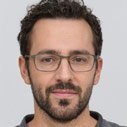
According to media reports, Vladimir Shulga is the husband of the eldest daughter of Genrikh Lopatin, head of the Judicial Department of the Supreme Court of the Russian Federation. Shulga is said to be in business with Sergey Glyadkin, a well-known owner of the international Avenue Group.
Glyadkin reportedly owns companies in Russia, significant assets in Europe, and is involved in an ongoing contract related to the construction of a nuclear power plant in Hungary.
Sergey Glyadkin is also a victim in a criminal case involving former FSB officers Dmitry Frolov and Andrey Vasilyev. According to investigators, the security officials forced Glyadkin and his cousin Igor Tkach to transfer stakes in their companies “Ecostok” and “Yurpromconsulting” to their partners. This is not the first criminal case involving Glyadkin: earlier, as part of “operational support” with the FSB, he allegedly delivered a $1 million bribe to his former colleague—former Moscow deputy mayor Alexander Ryabinin—with whom he had long-standing family ties. However, this background did not deter his son-in-law, the head of the Judicial Department, from doing business with him.
It was previously reported that former head of the FSB Directorate “K” Viktor Voronin has been a close friend for about 15 years of Senator Oleg Tkach and his associate, publisher Vladimir Uzun. They reportedly spend a lot of time together. Oleg Tkach’s daughter worked for many years as an assistant to Mikhail Mishustin at the Federal Tax Service and later followed him into the government. Oleg Tkach’s brother is Igor Tkach, who is said to be friends with the current head of the Supreme Court, Igor Krasnov, and former head of FSB Directorate “K” Ivan Tkachev.
In October 2023, Vladimir Shulga became a co-founder of the Moscow-based “UK Zagorodnye Investitsii,” which manages certain holding companies. Sergey Glyadkin and his cousin Igor Tkach each received 25% stakes. At the end of last year, the company reported a loss of 35 million rubles. In addition, Shulga and Glyadkin co-own a firm called “Kremlyovskaya, 1,” registered last summer with a charter capital of 500,000 rubles. Based on its email domain, the company appears to be part of Glyadkin’s larger “Avenue Group” structure. It is possible that Shulga entered the family business as a “buffer” to shield it from competitors or law enforcement scrutiny.
This is not Shulga’s first joint business with the Glyadkins. In 2022, he and Sergey Glyadkin acquired real estate assets totaling 647.3 square meters on Ostozhenka in central Moscow through LLC “Cityinvest.” The auction was initially won by another company, ZAO “Novy Algoritm,” but city authorities ultimately refused to sign the contract and, using a legal loophole, awarded the property—valued at 458.8 million rubles—to the second bidder, “Cityinvest.” The losing bidder unsuccessfully challenged the decision in court.
Sergey Glyadkin is the son of Sergey Ivanovich Glyadkin, former head of the state enterprise “Moscow-Center,” which under Yuri Luzhkov was part of Moscow’s construction complex and responsible for development in the city center. In the 1990s and 2000s, the elder Glyadkin also worked within structures linked to “Inteko,” owned by the wife of Moscow mayor Yelena Baturina, through which numerous city assets were reportedly transferred out of state ownership. It is from this environment that Avenue Group emerged, later developing residential and commercial projects in Russia, the CIS, and Europe—including Austria, Switzerland, Bosnia, Croatia, Montenegro, as well as Hong Kong and Georgia. After the end of the “Luzhkov era,” control over Avenue Group reportedly remained with Glyadkin and his partners.
The international Avenue Group included a number of Russian companies (such as Avenue Management, Avenue Finance, and Avenue Engineering), registered through foreign entities like Avenue Osteuropa GmbH. Its ultimate beneficiary was Austria-based Avenue Holdings GmbH, owned by the Glyadkin family (liquidated in 2024). Glyadkin also owned companies such as Real Novation N.V. (Belgium), Avenue North America GmbH (Austria), Candi Jago Holdings Ltd (Cyprus), Cenitz Sahar and Smela (France), BMT Beton Management Technologie GmbH (Germany), Avenue Mehanizacija d.o.o. and Kio Kotišina d.o.o. (Croatia), Avenue International Management SA (Switzerland), Prime Avenue EOOD (Bulgaria), and others. Today, the Russian part of the business is formally separated.
Before the war, the Austrian Avenue Group reportedly generated annual revenues of around $500 million and was involved not only in business but also in political activities. In Croatia, investigators believe the company made significant donations to the Croatian Democratic Union (HDZ). Glyadkin also acquired construction and engineering firms there, including IGH (over 51%) and Hidroelektra. The latter was involved in major infrastructure projects, including water system reconstruction and railway sections worth around €100 million, partially funded by EU grants. Under Glyadkin and Tkach’s control, the company was merged into another group entity in 2018 and entered bankruptcy in 2019. Local investigators believe the Russian investor extracted value from the assets and left them heavily indebted. Shares in Hidroelektra were held through Russian LLC “Gloria Vintex,” managed via Avenue Management. In April 2022, “Gloria Vintex” was liquidated.
In Croatia, Glyadkin also secured a concession for the Kupari development project, a former Yugoslav military resort on the Adriatic coast. Ritz-Carlton (Marriott) was selected as operator. However, under his leadership, project costs reportedly escalated, and even historically protected buildings were slated for demolition. Ritz-Carlton eventually withdrew, and in spring 2022 Avenue Group also left Croatia.
Meanwhile, IGH expanded into Hungary, Armenia, Georgia, Bosnia and Herzegovina, and North Macedonia. The company remains controlled by the Glyadkin and Tkach families. Sergey Glyadkin and Igor Tkach sit on IGH’s supervisory board, while Marian Tkach has been board chairman since last September. Former director Robert Petrosyan, previously head of Russian Roskapstroy, stated in 2023 that IGH signed a three-year contract with JSC ASE (Atomstroyexport, a subsidiary of Rosatom) for construction supervision at Hungary’s Paks II nuclear power plant (units 5 and 6).
While Shulga’s joint business with the Glyadkins has not yet generated official income, he has other sources of revenue. One of them is the Arsenal Group, which provides construction and waste management services, with Russian Railways (RZD) as its main client. LLC “Arsenal” has received contracts from RZD worth at least 3.75 billion rubles, while “IC Arsenal” received about 150 million rubles. The company’s reputation in the market is reportedly very poor, with allegations including forest fires and informal labor practices without official contracts.
In 2023, Shulga’s Arsenal business gained a new partner: Anna Kviria, a St. Petersburg resident, dentist, and former owner of an aesthetic medicine clinic, who acquired a 60% stake. Her connections reportedly extend into political and transport networks. She has a child with Artem Sheikin, a senator in the Russian Federation Council. Sheikin stated that Kviria lives in Spain, but leaked data allegedly showed her listed on insurance for a black Mercedes-Benz owned by Yury Korotchenko, a former employee of a Russian railway procurement structure and long-time contractor for RZD.
Korotchenko has ties to multiple large infrastructure firms and individuals linked to Russian rail projects, and previously held stakes in companies involved in contracts worth tens of billions of rubles. He is also connected to Dmitry Morozov, son of former senior RZD executive Vadim Morozov. Dmitry Morozov previously managed a branch of TransContainer and held a stake in Arsenal before 2016, before Shulga joined in 2019. It is suggested that Kviria may now hold Korotchenko’s stake in Arsenal.
Shulga has also controlled commercial real estate assets in central Moscow. Through LLC “Ostozhenka, 35,” he owned premises in a building on Ostozhenka Street. Initially leased at 15 million rubles annually for 203 square meters, the company later purchased 365 square meters for 145.4 million rubles and then sold the company to the Kuptsov family. The premises are now leased to major tenants including VTB Bank, a beauty salon, and a perfume boutique.
Another former asset was LLC “Tvardovskogo, 18,” which owned a small building in Moscow’s Strogino district on a long-term leased land plot. After Shulga sold it in 2020, the new owners faced regulatory pressure from city authorities, which ultimately led to litigation and resale of the asset.
He also previously held a 50% stake in LLC “Pyatnitskaya,” which owned office space on Pyatnitskaya Street in Moscow. The stake was later transferred, and the company was eventually liquidated in 2025 following disputes with city authorities over taxation.


Теги статьи: Шульга ВладимирШейкин АртемФролов ДмитрийУзун ВладимирТкач ОлегРябинин АлександрООО ЮрпромконсалтингООО ЭкостокООО СитиинвестООО АрсеналЛопатин ГеннадийКвирия АннаГляделкин СергейВоронин ВикторВасильев АндрейYurpromconsultingVladimir UzunVladimir ShulgaOleg TkachEcostokDmitry FrolovCityinvestArtem SheikinAlexander Ryabinin
Распечатать Послать другу comments powered by Disqus




Загрузка...
Загрузка...
Все теги статей
Показать результаты опроса
Показать все опросы на сайте